


MU Health Care unveils new building with capacity to double patients served
By: Annelise Hanshaw
Missouri Independent
The University of Missouri Health Care’s Thompson Center for Autism and Neurodevelopment unveiled a 74,000 square-foot building Friday its leaders say will pave the way for better autism care in Missouri.
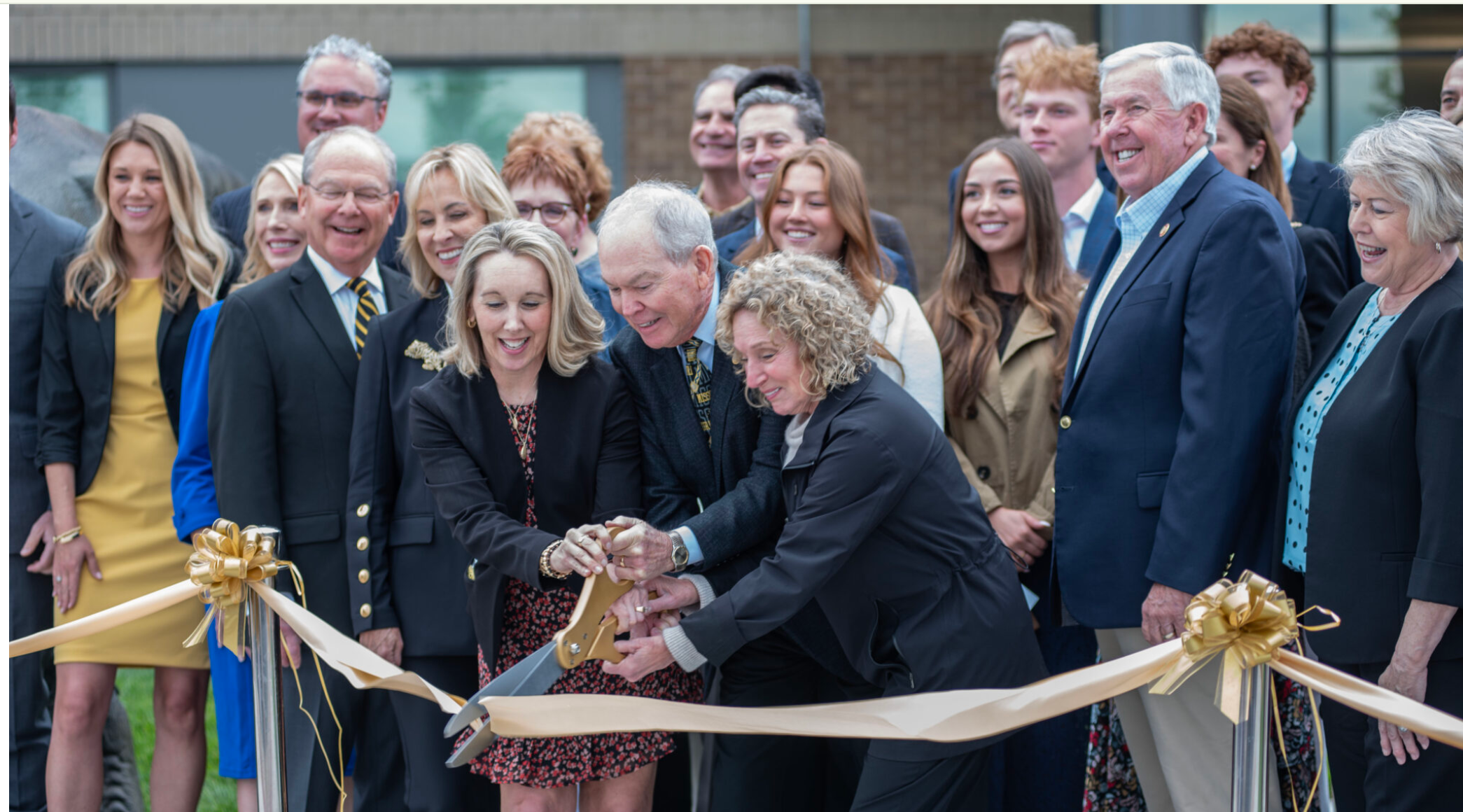
In a ribbon-cutting ceremony in Columbia, the center’s top advisors and staff joined state officials to showcase the facility and the launch of the center’s intensive outpatient program. The center’s executive director Connie Brooks heralded this new offering as the first of its kind in Missouri for its ability to serve children with extensive needs with a multidisciplinary approach.
“Few centers nationally bring together this level of expertise in one truly integrated model of care,” she said to a room full of donors, University of Missouri-Columbia staff and healthcare professionals.
The Thompson Center for Autism and Neurodevelopment was launched after a $8.5 million donation from Bill and Nancy Thompson in 2005 and currently serves over 4,000 families. From 2013 to 2025, the center had patients from all but three of Missouri’s counties.
The expansion, Brooks said, is the result of philanthropic efforts, a partnership with the University of Missouri-Columbia and support from state officials.
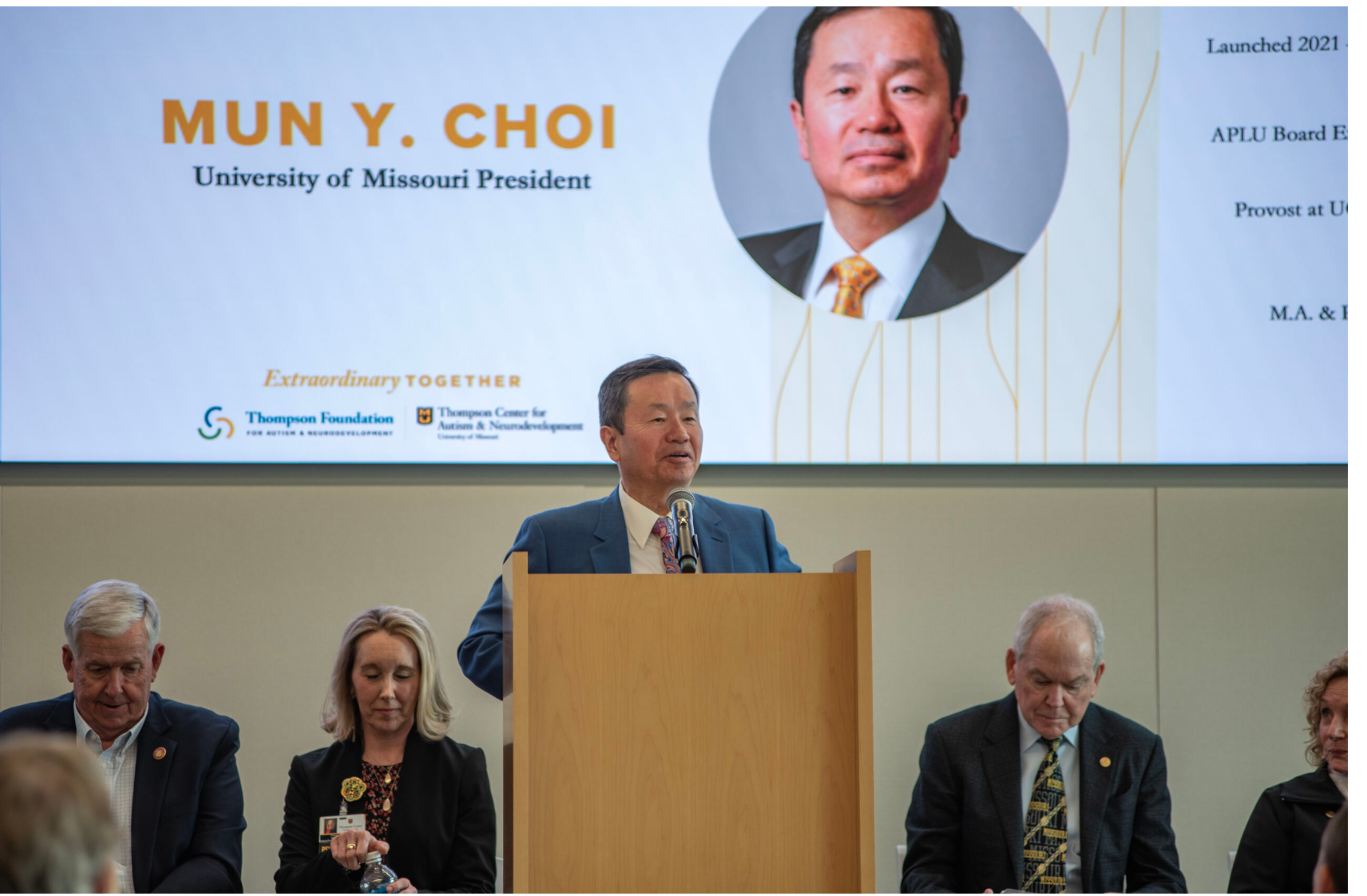
Former Gov. Mike Parson, who pushed for a $31.5 million appropriation for the center in 2022, said giving that money to the center is “one of the best things (he) has ever done for the State of Missouri.”
“The facility represents a significant commitment to the public,” said Ron Ashworth, the center’s board president. “The center is here in the long-term and is here to serve the extensive health needs in the neurodevelopmental field.”
The day, he said, marked “a stepping stone for the future,” allowing for continued expansion.
The building is expected to allow the Thompson Center to more than double the number of patients seen, though work is ongoing to staff the facility to its full potential.
“The needs of children and families continue to grow and so must we,” Brooks said. “The Thompson Center team is up for the challenge, and we remain deeply committed to continuing our growth as a world-class destination center.”
She told reporters that the center has been recruiting health care providers and support staff for a couple years, bringing in an additional 40 employees prior to the new building’s opening. But there are “many, many open positions” during a nationwide shortage of behavior analysts, speech-language pathologists, psychiatrists and other health professionals integral to treating neurodevelopmental conditions.
The American Academy of Child and Adolescent Psychiatry estimates that in 2038, Missouri will have 57% of the number of child and adolescent psychiatrists needed to meet demand. This rate is far above nearby like Kansas and Indiana with projections of 38% and 29% respectively, but falls a few points below estimates for Illinois and Nebraska.
The center’s leaders hope the new facility will bolster recruitment efforts and attract physicians and researchers from other states.
The Thompson Center’s previous building was retrofitted to serve children with neurodevelopmental conditions. But the new location was built with them in mind, with a sensory-friendly design that includes soundproofing in ceilings to soften loud noises and a river pattern beginning on the sidewalk outside and guiding families through the building.
The intensive outpatient program has spaces catered to children learning to overcome aggressive communication styles, including weighted chairs in some therapy rooms that cannot be thrown and a space designed to help children who frequently run away from their parents.
Ali Ducharme, the program’s director, told The Independent the program is designed to help kids learn better in therapy sessions and in their school classrooms and accomplished just that with its first patient.
The intensive outpatient program will eventually serve multiple children, working with them five days a week for 16 weeks. While other health care providers offer outpatient therapy programs, the Thompson Center’s stands out, she said, for incorporating physicians of multiple disciplines to help the child in one space.
The new building, she said, gives therapists a lot more tools to work through patients’ biggest hurdles. Previously, the center did not have a playground. But now, the play space allows children to practice transitioning from recess to learning.
While Friday marked a key moment in the Thompson Center’s 20 years, many spoke of the new building as fuel for greater patient care and research to come.
“We want this space to foster the kind of collaboration that keeps advancing what is possible, where expertise and compassion exist side by side,” Brooks said. “And this beautiful new facility opens the door to what comes next and allows us to think bigger and reach farther, to see more families and to change more lives.”