


Cole County Circuit Judge Daniel Green ruled quickly in the case that will ultimately be decided by the Missouri Supreme Court
BY: RUDI KELLER
Missouri Independent
Cole County Circuit Judge Daniel Green ruled quickly in the case that will ultimately be decided by the Missouri Supreme Court
The Missouri Constitution’s provisions allowing a referendum on “any act” of the Legislature do not extend that power to laws establishing congressional districts, Cole County Circuit Judge Daniel Green ruled Wednesday afternoon.
Delivering his decision just a few hours after conducting a trial in the case, Green wrote that to allow a referendum on redistricting, the section establishing the referendum power isn’t the only section that applies.
“That provision at most merely raises, but does not answer, the question whether the referendum power extends to congressional redistricting, a domain (the Missouri Constitution) and the U.S. Constitution separately and specifically assign to the General Assembly,” Green wrote.
The ruling accepts in whole the arguments advanced to defend Secretary of State Denny Hoskins’ decision that the referendum, while containing the correct number of signatures to qualify for the ballot, seeks to accomplish an unconstitutional goal. In court, attorneys representing Hoskins and the Republican Party argued that the map gerrymandered in 2025 to give Republicans an edge in the 5th District was not subject to a referendum.
The argument tied federal and state constitutional provisions together as a unifying reason the referendum could not be allowed. In his ruling, Green wrote that deadlines like the federal requirement that the congressional election occur Nov. 3 made the map exempt from the referendum as an emergency measure.
The map passed by lawmakers must be kept in place with the full effect of law “to avoid a far graver consequence: the inability to hold a constitutionally valid election,” Green wrote.
If the map was subject to referendum, it would suspend it and the district lines used in the August primary would revert to the maps used in 2022 and 2024.
“The Missouri Constitution does not supply any statement — let alone a clear one — reallocating authority over congressional redistricting away from the General Assembly to a referendum process,” Green wrote.
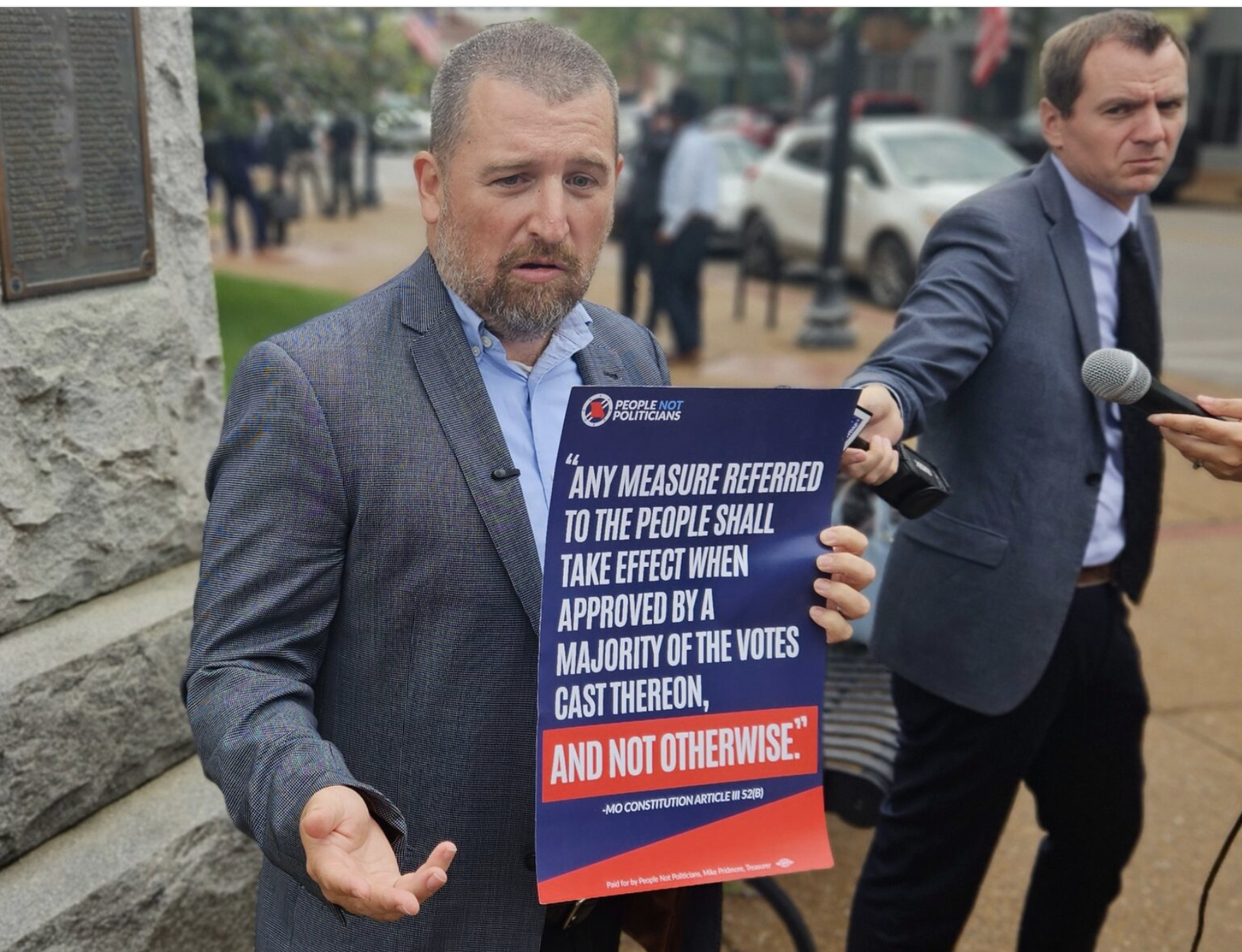
People Not Politicians, turned in 305,000 signatures in December and, after months of litigation and waiting for Hoskins, initiated the lawsuit heard Wednesday. Green’s ruling is just the first step in the process for determining Missouri law on a redistricting referendum, said Richard von Glahn, executive director of People Not Politicians, in a statement Wednesday afternoon.
“The most important thing that happened today is that there was a ruling,” von Glahn said. “The state has tried to slow down the judicial process for months and now that we are out of Cole County, the real decision will be made.”
During the trial, attorney John Gore, representing three Republican committees, said the People Not Politicians referendum, if allowed, would disenfranchise the voters who participated in those primaries.
“It’s difficult to imagine any kind of judicial order that would cause more widespread voter confusion or erosion in confidence in the integrity of this state’s elections than the relief plaintiff seeks,” Gore said.
Gore represents the Republican National Committee, the Republican Congressional Campaign Committee and the Missouri Republican State Committee.
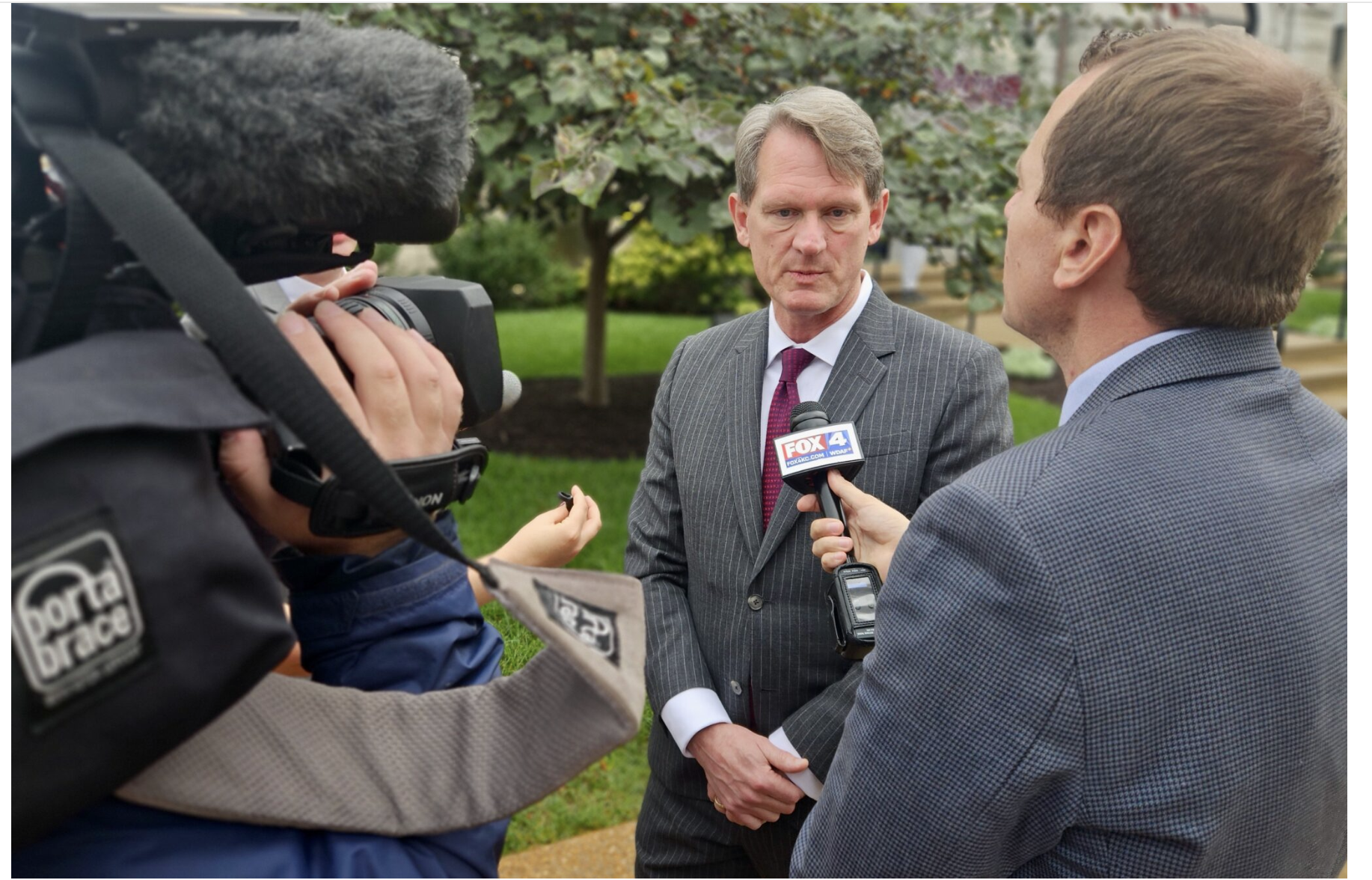
In his arguments seeking to overturn Hoskins’ decision to block the referendum, attorney Chuck Hatfield, representing People Not Politicians, said the consequences of a decision that upholds the law are not a legally sufficient reason to deny a vote.
“The secretary kind of reasons backwards and says, ‘well, judge, if you find that this measure is sufficient, that’s going to wreak havoc.’ And that doesn’t matter,” Hatfield said. “The question is, what is the law?”
Green’s decision certain to be appealed and the deadline for courts to add items to the ballot is Sept. 8.
The Missouri Supreme Court, which sent Green a letter last week asking for swift action, showed its interest in everything involving the referendum when it acted Tuesday to take over hearing an appeal in a case over how many signatures should be checked on a referendum petition.
On Monday, Cole County Circuit Judge Christopher Limbaugh ruled that almost 103,000 signatures, gathered before the petition form was approved Oct. 14, were invalid. An appeal was filed with the Western District Court of Appeals but the Missouri Supreme Court took it “as the case involves a question of general interest or importance.”
The Supreme Court set arguments on the signature case for Sept. 2.
For People Not Politicians, the case heard Wednesday was over the meaning of the word “any” in the Missouri Constitution’s referendum section.
“When the language of the constitution is clear and unambiguous, the court has no duty but to apply the language that is written, and when the language is clear, the court may not resort to canons of construction to arrive at a different result,” Hatfield said.
In 1962, when the Missouri Supreme Court upheld a congressional redistricting plan, Hatfield said, it said a valid plan is subject to a referendum.
“Judge, to me that’s the end of it,” Hatfield said.
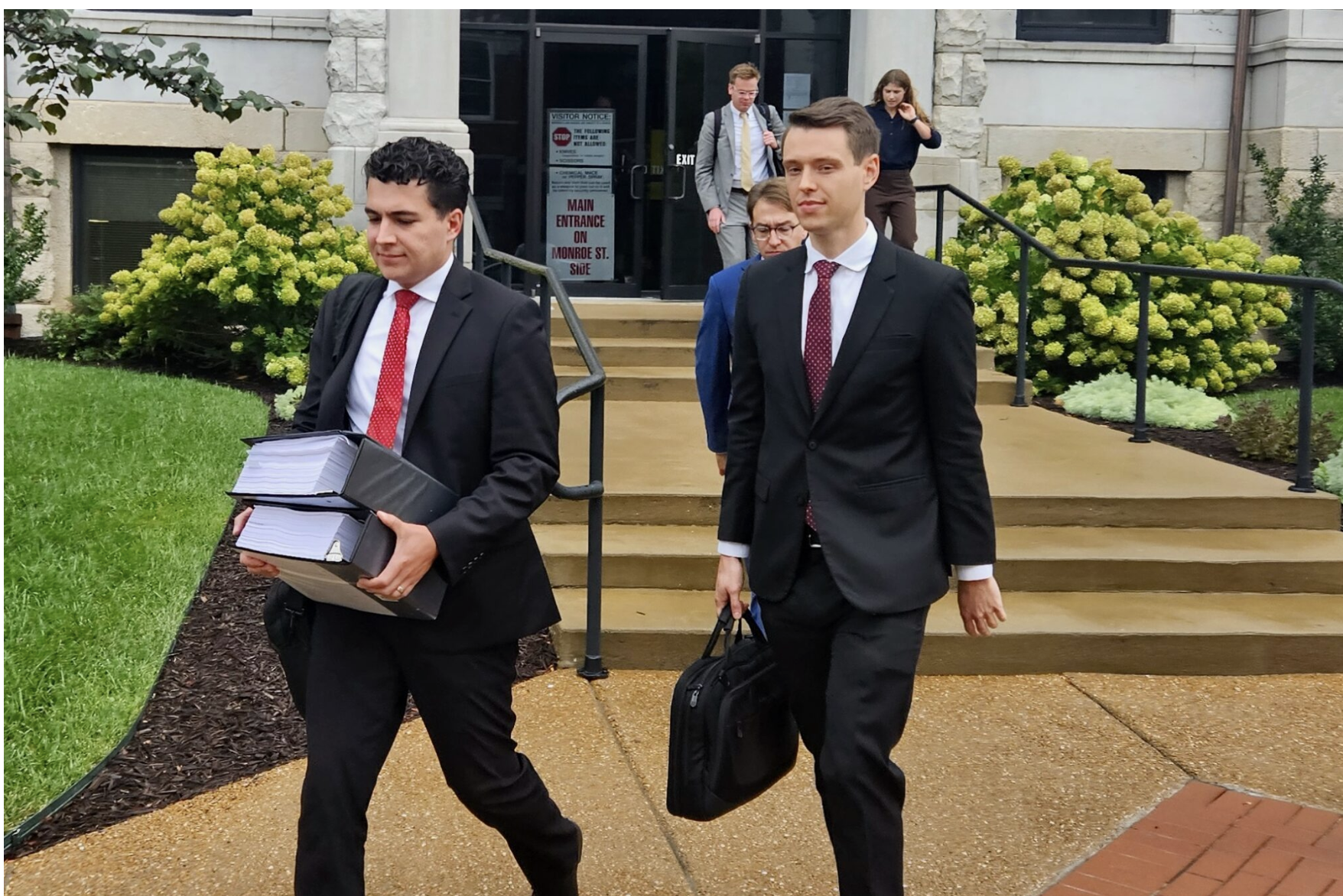
Lou Capozzi of the attorney general’s office, representing Hoskins, said Hatfield’s was wrong and “his legal theories are frankly absurd.”
The U.S. Constitution vests sole authority for designing congressional district maps with legislatures and does not contemplate state votes. States can make a specific delegation of that authority to another body, such as the independent commissions used in some states, he said.
During his argument, Gore said a provisions of the Missouri Constitution prohibiting referenda on Missouri House and state Senate maps produced by independent commissions applies to congressional redistricting done by the legislature.
Green accepted that opinion and included it in his ruling. While the language is in the sections on legislative districts, that “placement, however, does not delineate the scope” of the prohibition, he wrote.
In court, Capozzi also pointed to the overlapping calendars for elections and certifying ballot questions. The deadline for deciding if a referendum petition on a redistricting plan has sufficient signatures for the ballot is the same day as the primary, he said.
If Missouri allowed a referendum on redistricting, he said, the deadlines would give time to change the districts before a vote.
“If Missouri had made that choice, (lawmakers) would have set up a sensible, logical system,” Capozzi said.
Hatfield, in response, said Capozzi is stretching his argument too far.
“To assume that our legislature would make a logical choice is a major fallacy,” Hatfield said.
So far, Put Missouri First, the committee opposed to the referendum, has raised $3 million from national GOP PACs. People Not Politicians has raised $7.2 million.
An election campaign over the referendum is likely to cost many multiples of those amounts.
Von Glahn, speaking to reporters outside the courthouse, said he is expecting an expensive campaign if the referendum is on the ballot but that voters will make the right choice.
“I understand that there will probably be a large spend,” von Glahn said, “but Missourians know a clunker when they see it.”