


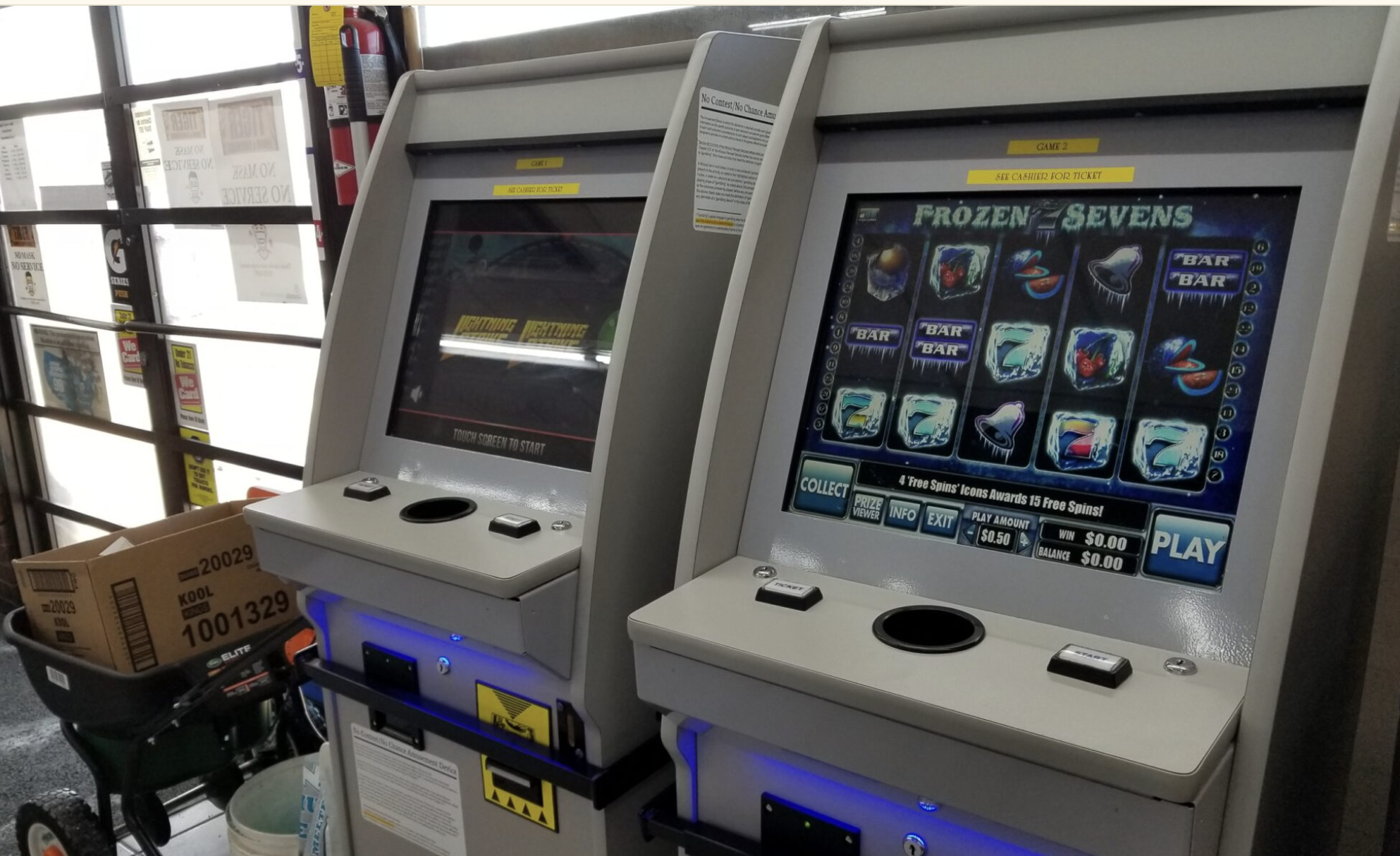
Torch told Missouri retailers it will switch off its machines Friday as Attorney General Catherine Hanaway and federal prosecutors pursue a joint criminal investigation
BY: RUDI KELLER
Missouri Independent
After years of legal battles to protect its business from criminal prosecution, Torch Electronics will suspend operations of its slot machines in Missouri under pressure from state Attorney General Catherine Hanaway and the U.S. Department of Justice.
In a letter sent to retailers on Monday, the Wildwood-based company said it would turn its games off on Friday as it awaits the results of a joint state-federal investigation.
“The U.S. Attorney’s office and the Missouri Attorney General have indicated they are going to move forward with criminal investigations and proceedings,” the company said in the letter obtained by The Independent. “While we are confident in our position, criminal proceedings create real uncertainty for our business — and more importantly, they create risk for all of you. We take that seriously, and we want to do everything we can to protect you.”
Hanaway’s office, in a news release, said Torch shut down its games “to avoid prosecution.” She called Torch “the largest provider of illegal gambling devices” in the state and said that while the suspension is a good thing, it will not end enforcement efforts.
“While this is a tremendous step forward for Missouri, our office will continue to investigate and seek enforcement action against other operators, manufacturers, and retail stores facilitating this illegal activity,” Hanaway said.
The U.S. Attorney’s Office for the Eastern District of Missouri declined to comment on the investigation or Torch’s action. Torch spokesman Gregg Keller declined to comment on the decision to suspend operations.
Torch has been placing its games in retail locations such as convenience stores, bars and fraternal halls for nearly a decade. It has aggressively used the courts to stall prosecution.
The Missouri State Highway Patrol filed about 200 cases with county prosecutors in 2019 and 2020, alleging the machines violate state law. But few actual charges were filed in court and most targeted convenience store owners for misdemeanor violations.
The only time Torch itself has been targeted for criminal prosecution was in Linn County. But that case was dropped early in 2023 after the prosecutor’s office in the county changed hands in the 2022 election.
In state lawsuits against the Missouri State Highway Patrol, the city of Springfield and in federal court against another video game supplier, Torch has argued that its machines are legal because they do not include an element of chance to determine whether players win their bets.
There is a pre-reveal function on every Torch game that allows a player to see whether the next wager in a particular game will win a prize. Torch contends the pre-reveal feature removes the element of chance.
The legal uncertainty led many to call the machines “gray market games.”
Until Hanaway took office last year following the resignation of Andrew Bailey, there had been no effort in the attorney general’s office to participate in prosecutions.
In 2023, Bailey withdrew from defending the Missouri State Highway Patrol in a lawsuit brought by Torch after receiving campaign contributions from committees funded by the company.
In that case, the Western District Missouri Court of Appeals ruled last year that Torch had no grounds to sue because a civil case cannot be used to block criminal prosecution.
And in the federal case involving the competitor, a jury in October ordered Torch to pay $500,000 for luring away business with illegal slot machines. In a written decision in the case, handed down in February, U.S. District Judge John Ross declared that Torch’s machines “meet the statutory definition of ‘gambling device’ and are therefore illegal under Missouri law when played outside a licensed casino.”
Ross’ ruling was followed by Hanaway stepping up prosecutions around the state. Her office has filed felony gambling charges and civil lawsuits against convenience store owners in Greene and Dunklin counties.
The number of Torch machines in operation around the state is unknown, as are the amounts of money being wagered. In legislative testimony last week, Lynn Wallis, owner of a company that operates 50 convenience stores, estimated there are 30,000 to 40,000 unregulated machines across Missouri.
Her company has machines in 18 locations, Wallis said, and banked more than $1.5 million in profits in 2025.
Wallis testified during a hearing of the state Senate Select Committee on Gaming that is considering a bill to allow regulated slot machine games licensed by the Missouri Lottery. The bill, which narrowly passed the House, has been one of the most heavily lobbied bills of this year’s session.
State Senate President Pro Tem Cindy O’Laughlin, the Shelbina Republican who chairs the select committee, has been a harsh critic of the convenience store slot machines.
“I think this is appropriate,” O’Laughlin said in a text to The Independent when asked about Torch’s actions to shut down its games.
Gambling interests are among the state’s most prolific political donors. An analysis by The Independent as part of its coverage of the video lottery bill debate shows gambling interests gave $3.3 million to campaigns since the start of 2025.
Over the past year, Torch donated $650,000 to political action committees run by its lobbyist, former House Speaker Steve Tilley. Warrenton Oil — whose convenience stores host many Torch machines — contributed another $135,000 to those PACs.
In the letter to retailers, Torch said it would shut the machines down and post a notice to customers on each that the game is not available “while we wait for clarity on the new legislation.”
The letter said it would remove games from any location where the retailer no longer wanted them. The letter also asked retailers to contact legislators with support for the video lottery bill.
“We hope this process leads to a fully regulated VLT product that is good for everyone —Torch, you and our customers,” the letter stated.
If Torch were convicted of gambling crimes, it would be barred from participating in a video lottery program.
“Torch’s agreement to proactively halt these operations,” Hanaway said in the release, “signals clearly that there has never been a gray market.”