


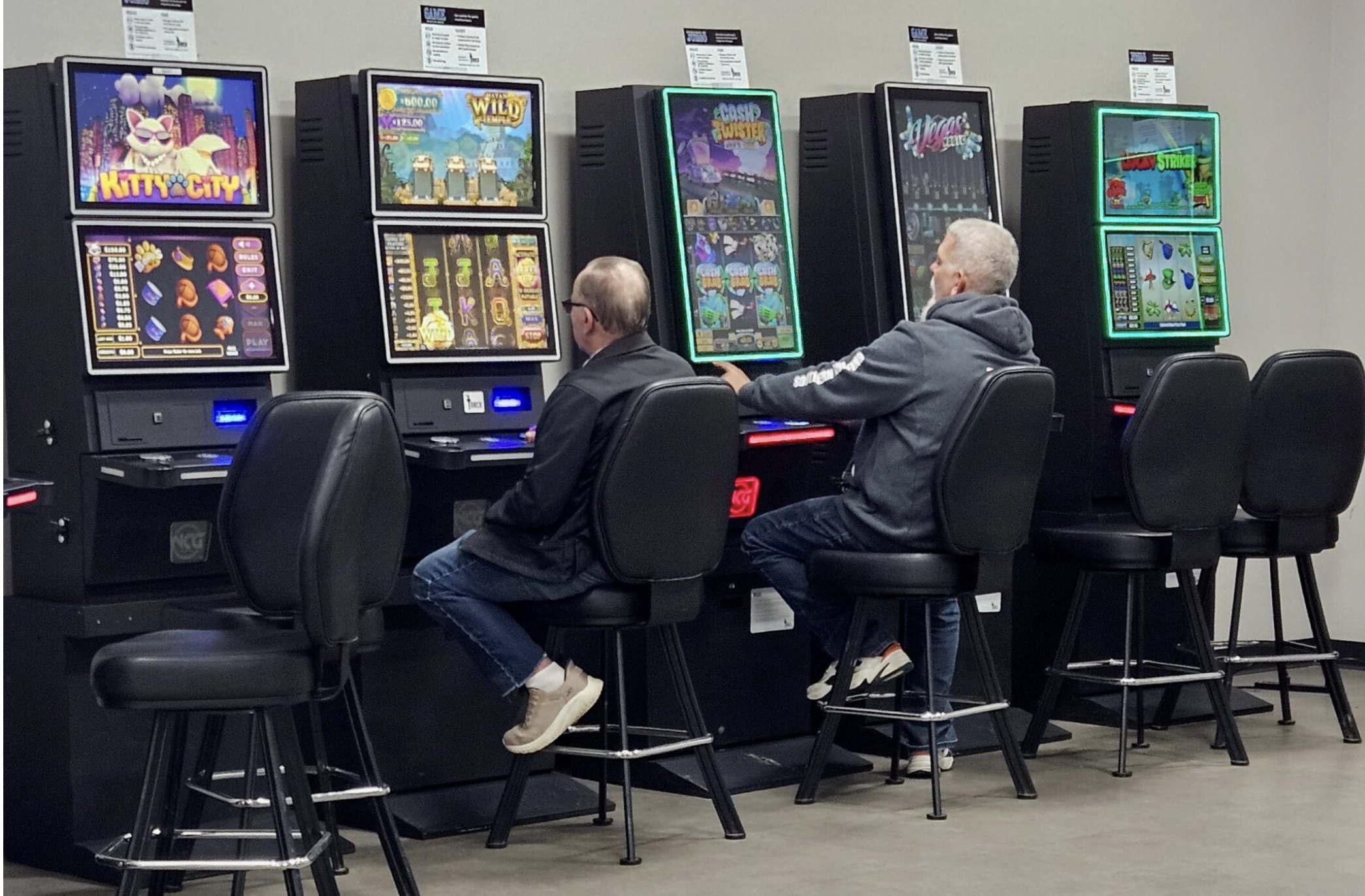
Torch Electronics said it would turn off its games Friday as part of an agreement to avoid criminal prosecution. In at least one location, the games remained available despite the promise
BY: RUDI KELLER
Missouri Independent
Torch Electronics shut down its slot machine-like games across Missouri this week under pressure from a federal investigation, Attorney General Catherine Hanaway said Thursday, marking a sharp reversal for a company that spent years insisting the games were legal.
In an interview with The Independent, Hanaway also said her office will consider dropping charges already filed against convenience store owners who hosted Torch machines in their businesses if they agree to not restart the machines.
Talks with Torch about the next moves are underway. The threat of prosecution remains if the company does not follow through, Hanaway said.
“We’re still talking to them about what the other terms look like,” Hanaway said. “But the first step was to get them to stop taking Missourians’ money.”
Despite a letter Wednesday from Torch telling retailers the games were to be shut down, The Independent found Torch games in use at one Columbia convenience store Friday morning. Torch’s letter stated that “beginning April 10, 2026, Torch will be pausing operation of its NCG machines across Missouri and we appreciate your timely cooperation in making that happen.”
At another Columbia location, Torch games were turned around and unplugged.
Games that remain despite the agreement will put business owners in danger of prosecution, Hanaway said Friday in a text message.
“Compliance is important,” Hanaway said. “Those who don’t comply will be subject to additional penalties up to and including criminal charges.”
A spokesman for Torch did not respond to a request for comment on the continued operation of the company’s games. The company has declined comment on Hanaway’s allegation, made in a Wednesday news release, that it is the “largest provider of illegal gambling devices” in Missouri.
Hanaway’s enforcement push comes after years of frustration for the local prosecutors who have sought charges against the Wildwood-based game vendor and retailers.
Torch saw a felony case against the company dismissed in Linn County in 2023 when a new prosecutor took office. A misdemeanor case against convenience store owner James McNutt for hosting Torch machines has been in court for more than six years in Franklin County.
“Part of the problem is that Torch is a very large enterprise,” Hanaway said. “It’s been represented by very good counsel, some of the best firms in the country, and it’s been going up against county prosecutors who have rapes, murders, assaults, all these other things to deal with that understandably have been a higher priority.”
The new enforcement push began around the time U.S. District Judge James Ross wrote a formal ruling to back up an October jury decision that Torch was illegally competing with arcade-like games by offering illegal slot machines. Ross said in a February decision that Torch’s machines “meet the statutory definition of ‘gambling device’ and are therefore illegal under Missouri law when played outside a licensed casino.”
Hanaway announced she was working with federal agencies on an investigation of Torch and soon began filing felony gambling charges against convenience store owners.
“Why this effort is so different is because it has been the two United States Attorney’s offices taking the lead, working with us,” Hanaway said. “We’ve been working with county prosecutors, city police departments, the Highway Patrol, and part of the reason you start with the convenience store operators is when you have a big enterprise like this, they are the ones who can provide some information about how it flows up the chain.”
The stepped up enforcement is also a marked contrast to Hanaway’s predecessor, Andrew Bailey.
In 2023, Bailey was seeking a full term in office after being appointed after the election of Eric Schmitt to the U.S. Senate. After his campaign committee and an affiliated political action committee took large contributions from PACs linked to Torch, Bailey stopped defending the Missouri State Highway Patrol in a lawsuit the company filed seeking to block law enforcement from pursuing criminal charges.
The contributions flowed through political action committees controlled by Steve Tilley, Torch’s lobbyist. Bailey’s campaign accepted $14,125 in contributions from the PACs, while Liberty and Justice PAC, Bailey’s committee, accepted $25,000 from those same Tilley-linked PACs and $1,000 directly from Warrenton Oil, a convenience store company that joined Torch in the lawsuit.
Gov. Mike Kehoe appointed Hanaway to the job after President Donald Trump appointed Bailey as co-deputy director of the FBI. Hanaway and Conservative Justice for Missouri, the PAC set up to support her, have accepted donations from the same Torch-linked PACs.
During 2025, Torch donated $600,000 to seven PACs controlled by Tilley and those committees contributed $14,125 to Hanaway’s campaign and $50,000 to Conservative Justice for Missouri.
The committee names do not indicate either the Tilley or Torch connections. Instead, they operate under names that include Missouri Growth PAC, Missouri Prospers PAC and Missouri Senior PAC.
Hanaway said she was not aware of the underlying source of donations to those Tilley-related PACs.
“You are breaking news to me about the source of some of those funds,” Hanaway said. “I review (the reports) before we submit them, but I don’t have the whole historical background of every person or every contributor to a PAC that then contributes to me.”
McNutt, the owner of Midwest Petroleum facing misdemeanor charges in Franklin County, is also a contributor to Hanaway, as is its defense attorney, Scott Rosenblum. McNutt gave $2,825, the maximum contribution allowed, to Hanaway’s campaign committee, and Rosenblum gave $1,000.
She said she may have to return the donation from McNutt after a review. Hanaway’s office is not involved in the prosecution of McNutt.
“That makes more sense to me, that I would have missed that,” Hanaway said.
Attorneys have many clients and Hanaway said she didn’t see any issues with the donation from Rosenblum.
Working with local prosecutors, Hanaway’s office charged convenience store owners in Dunklin and Greene counties with felony violations of gambling laws. Some of those charges involve slot machines no different from those offered in legal casinos and others involve games that have the pre-reveal feature Torch has contended made its machines legal.
The pre-reveal feature allows a player to know if the next play will win a prize in any particular game or bet level.
The top goal of the prosecutions, Hanaway said, is to get the machines out of the convenience stores. The charges could be dropped, she said.
“It depends what the people do that are involved in those cases,” she said. “If they are willing to cease operations and do so on a timely basis and don’t try to plug their machines back in, I think there’s a very good chance we would dismiss those charges.”
After years of opposing legislation that would supplant its games with licensed machines regulated by the Missouri Lottery Commission, Torch has switched to backing it. A bill that narrowly passed the House would allow a one-year transition period for Torch to operate while the lottery games were installed.
The notices Torch provided retailers for posting on the darkened machines state that the game is not available “while we wait for clarity on the new legislation.”
The bill is awaiting action in a Missouri Senate committee.
Hanaway, a former Missouri House speaker, said she has no advice for lawmakers on what to do with the bill.
“Whatever the legislature tells me the law is,” Hanaway said, “is what I would enforce.”