


Without a contested statewide candidate primary, Amendments 4 and 5, along with congressional primaries, are the main attractions for voters. If past trends hold up, the controversial ballot measures will add hundreds of thousands of votes to primary totals
BY: RUDI KELLER
Missouri Independent
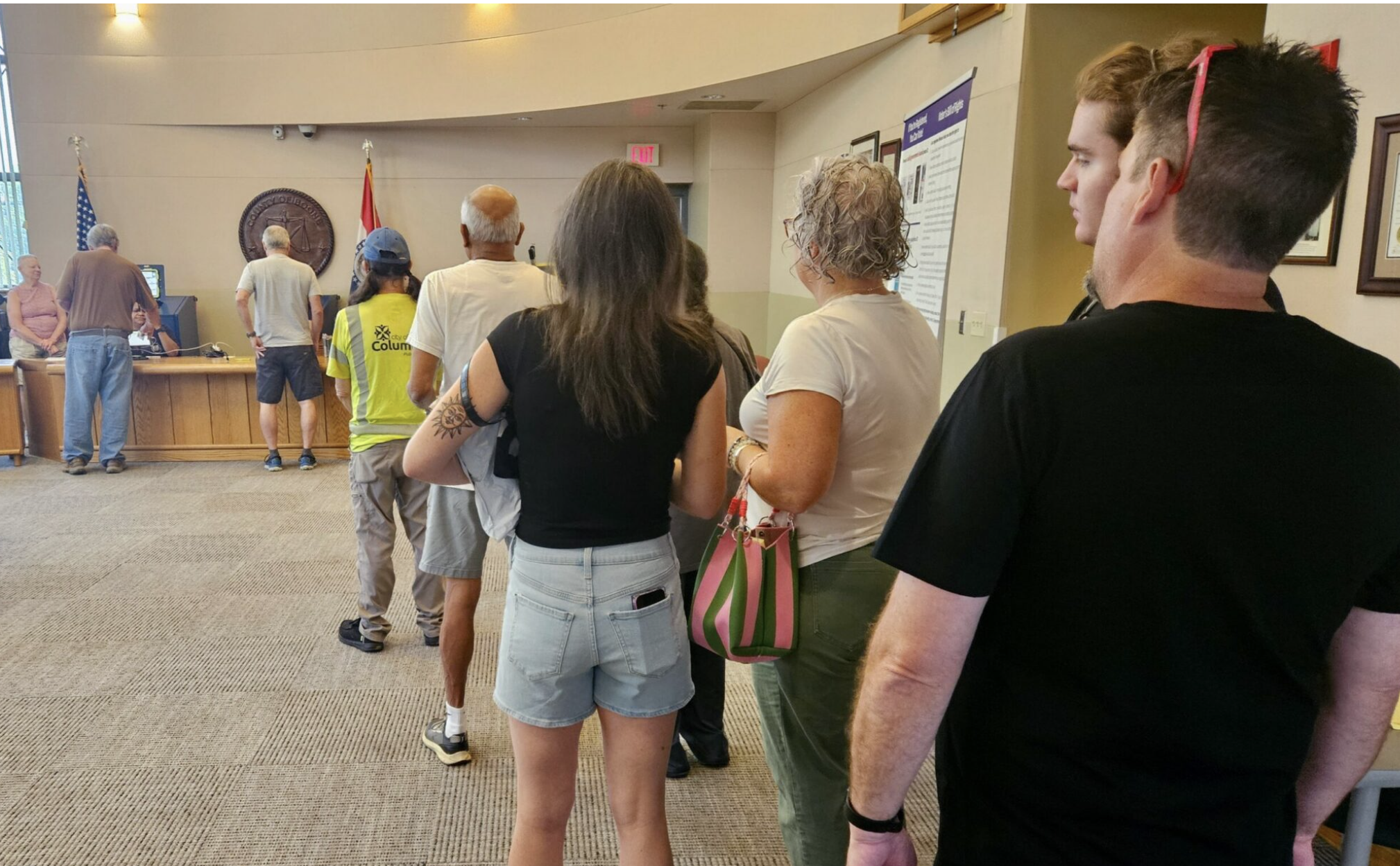
The first day of early voting in Missouri indicates a strong primary turnout, comparable to or possibly exceeding past primaries where hotly contested ballot measures drew more votes than candidate races.
Four times as many voters cast ballots in St. Charles County on Tuesday than on the first day of early voting before the 2024 primary, Director of Elections Kurt Bahr said.
In Boone County, roughly 3% of registered voters took advantage of the opening of the “no-excuse absentee” period where any voter can cast their ballot through Monday, Aug. 3, County Clerk Brianna Lennon said.
In Greene County, more than 1,000 ballots were cast by midday Wednesday, County Clerk Shane Schoeller said. That is a little less than 5% of the registered voters.
Schoeller said he expects a 30% turnout in his county.
“We saw a definite increase yesterday of absentee voters with the start of no-excuse absentee voting,” Schoeller said. “I have not heard of any one issue or candidate race driving folks out to vote.”
In St. Louis County, about 7% of registered voters had cast ballots by midday Tuesday.
It is too early to make a firm prediction about statewide turnout for the primary, Secretary of State Denny Hoskins said Tuesday.
“Local election authorities are working on their preliminary estimates now,” he said. “My office will gather all of that information and use it to make a statewide projection next week when all of the local estimates are available.”
In 2004, 2018 and 2020, more votes were cast on the major ballot measures than in contests for statewide office. The major issues — all of which were successful — were proposals to ban same-sex marriage in 2004, a referendum on right to work in 2018 and a constitutional amendment expanding Medicaid eligibility in 2020.
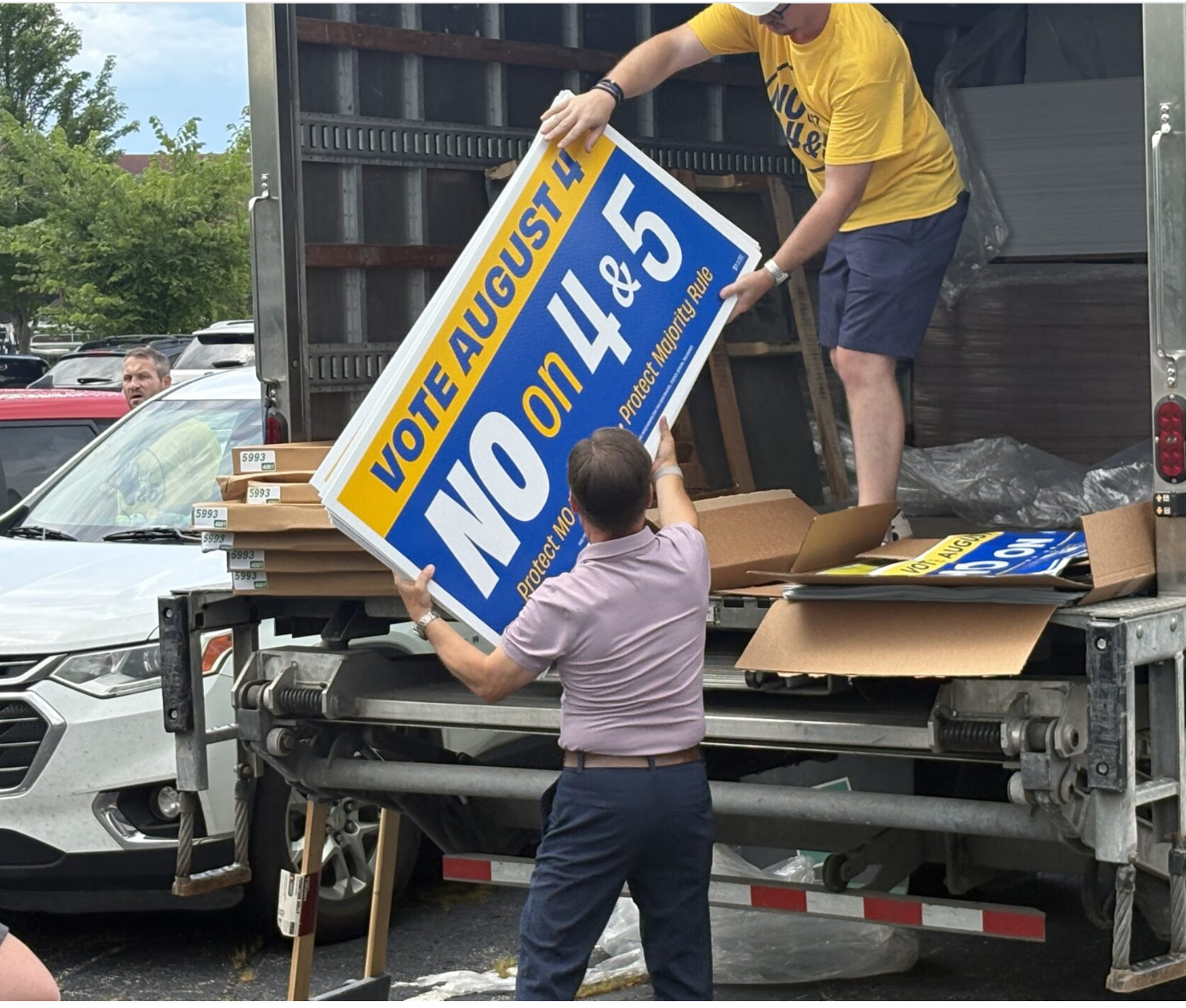
This year, there are two constitutional amendments proposed by lawmakers that have generated multi-million-dollar campaigns. Amendment 4 would change the majority requirement for constitutional amendments proposed by initiative. Amendment 5 is intended to eliminate the state personal income tax by replacing the revenue with expanded and increased sales taxes.
In St. Charles County, there is also a heated primary for county executive in the Republican Party.
“As far as what’s driving the turnout, Amendments 4 and 5 seem to be the bigger factors, but we can’t rule out the county executive race as also being a factor,” Bahr said.
Another reason for the increase is likely voter familiarity with the early voting process, he said.
The 371 votes cast in Boone County on Tuesday are more than double the number cast on the first day of early voting in 2024, Lennon said. She expects 40% turnout when she would otherwise expect it to be 25% or less.
The only significant local primary in Boone County is in the Republican contest for Congress in the portion added to the 5th District.
“That bears out that there’s a high level of interest,” she said.
In an average Missouri primary election, between 900,000 and 1 million people cast ballots, about two-thirds in the Republican primary. That is just over 20% of the approximately 4.5 million registered voters.
In primaries with major ballot measures, turnout has been as high as 34%, which would result in about 1.5 million votes in this year’s primary.
There is a statewide primary for auditor, but incumbent State Auditor Scott Fitzpatrick has not faced a strong campaign from opponent Jerry Wistrand Jr. of Oak Grove. Neither of the Democratic candidates, Quentin Wilson of St. Louis and Gregory Upchurch of St. Charles, have raised enough money to pay for a sustained ad campaign.
The last time that auditor was the only statewide office on the primary ballot, turnout was just over 10%.
The money in this year’s election is in the ballot measures and congressional primaries.
The campaigns for and against Amendments 4 and 5 have spent more than $9.2 million on broadcast ads, according to Federal Communications Commission records tracked by The Independent.
Primaries in three congressional districts — the 1st District in St. Louis, the 6th District in north Missouri and the 5th District stretching from Kansas City into mid-Missouri — have also drawn significant spending, with $4.5 million on broadcast ads purchased by candidates and outside groups.
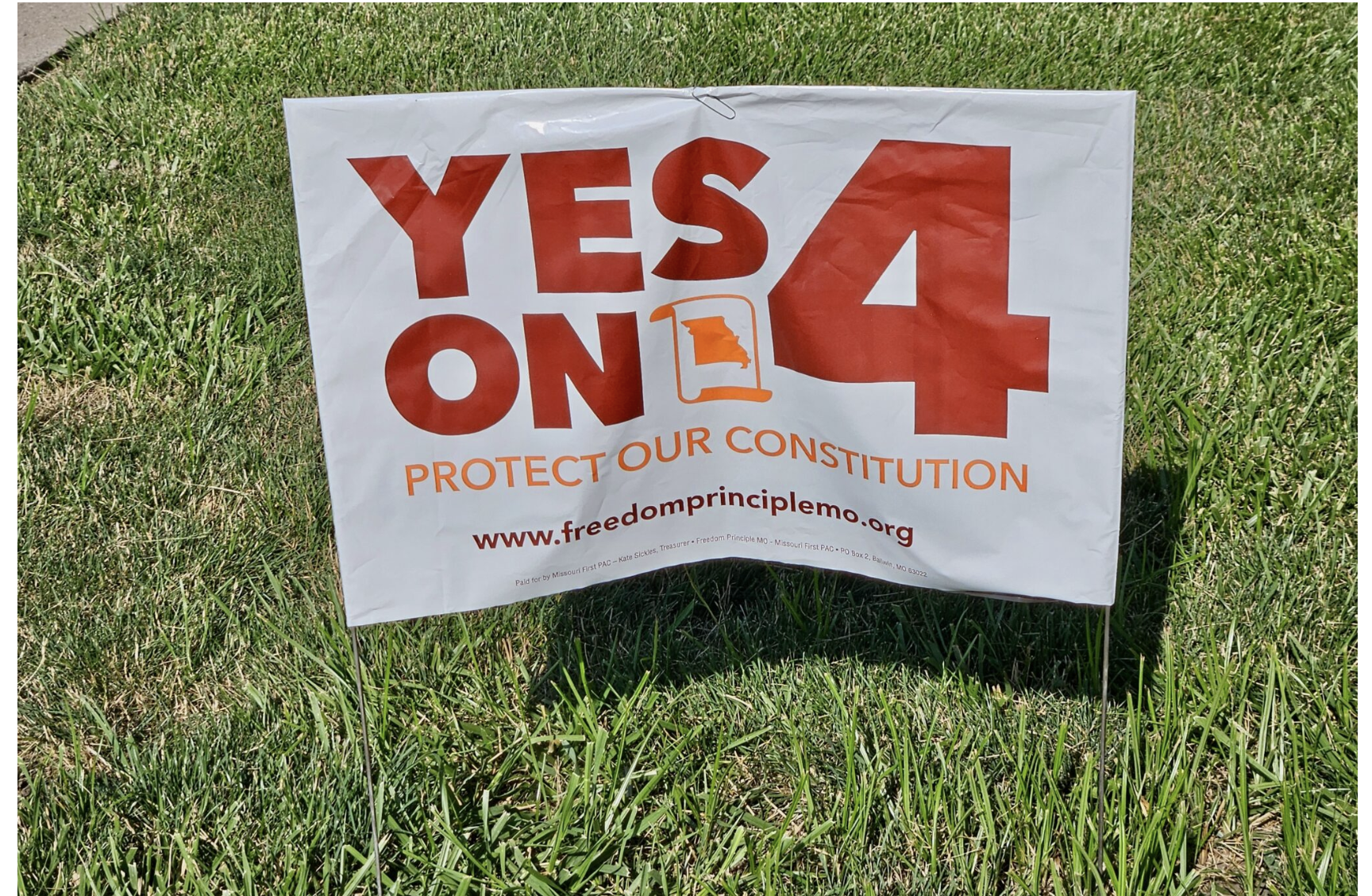
Amendments 4 and 5 are major Republican priorities that could have waited for the November election. Gov. Mike Kehoe decided they would be on the primary ballot, leaving another big issue, abortion rights, for November as Amendment 3.
The data from past primaries with major ballot questions could point to one of the reasons Kehoe chose the primary for Amendments 4 and 5 — when ballot measures drive up turnout, it is a much more Democratic electorate.
The highest Democratic primary turnout this century was in 2004, when almost 850,000 voters cast ballots in the primary for governor. Democrats also nearly doubled the average turnout in 2018 and 2020.
There was not a noticeable increase in Republican ballots in those years.
Data pointing to a party advantage from ballot measures in general elections is less clear.
Ballot measures make little difference for turnout in November elections in presidential years, when about 3 million people vote.
In the most recent off-year elections, in 2018 and 2022, the ballot had marijuana measures that did not generate strong opposition campaigns. Turnout hit 2.4 million for the heated U.S. Senate contest in November 2018, while it was 2 million in 2022 for a non-competitive election.
Republicans are trying to hold their two-thirds supermajority in the General Assembly and using the primary for Amendments 4 and 5 may help save GOP seats in swing districts.
The Independent’s series of stories on this year’s state Senate primaries show strong opposition to both measures among Republican primary voters, enough for the candidate’s stands to become a defining issue in some races.
Two of the Republicans who voted against the bill that became Amendment 5 are seeking seats in the Senate — state Rep. Rudy Veit in the 6th District and state Rep. Greg Sharpe in the 18th District.
“I’ve been in the legislature eight years, and I don’t have that much trust in them,” Veit said of provisions in Amendment 5 that allow unlimited changes to the sales tax. “I can’t imagine what people on the outside looking in see.”
Voters interviewed just after casting ballots in Columbia on Wednesday echoed Veit in their reasons for opposing Amendment 5.
“The notion of getting rid of the state income tax so that we can have everything based on sales and usage taxes is such an anti-regular people and pro-wealthy maneuver that it’s like just a horrendously horrible policy,” said Stephen Quackenbush of Columbia.
Even if the turnout is high, it will be half or less of the number who vote in presidential elections. Voting in low-turnout elections gives each voter who does cast a ballot a bigger voice, Johanna Cox of Columbia said.
“This one that’s happening, where there isn’t a big name on the ticket, means that fewer people come out to vote,” Cox said. “So it’s really important for people to still come out and vote.”