


While the Department of Social Services says the change is aimed at lowering payment error rates, advocates say it could actually increase errors and cause eligible Missourians to lose benefits
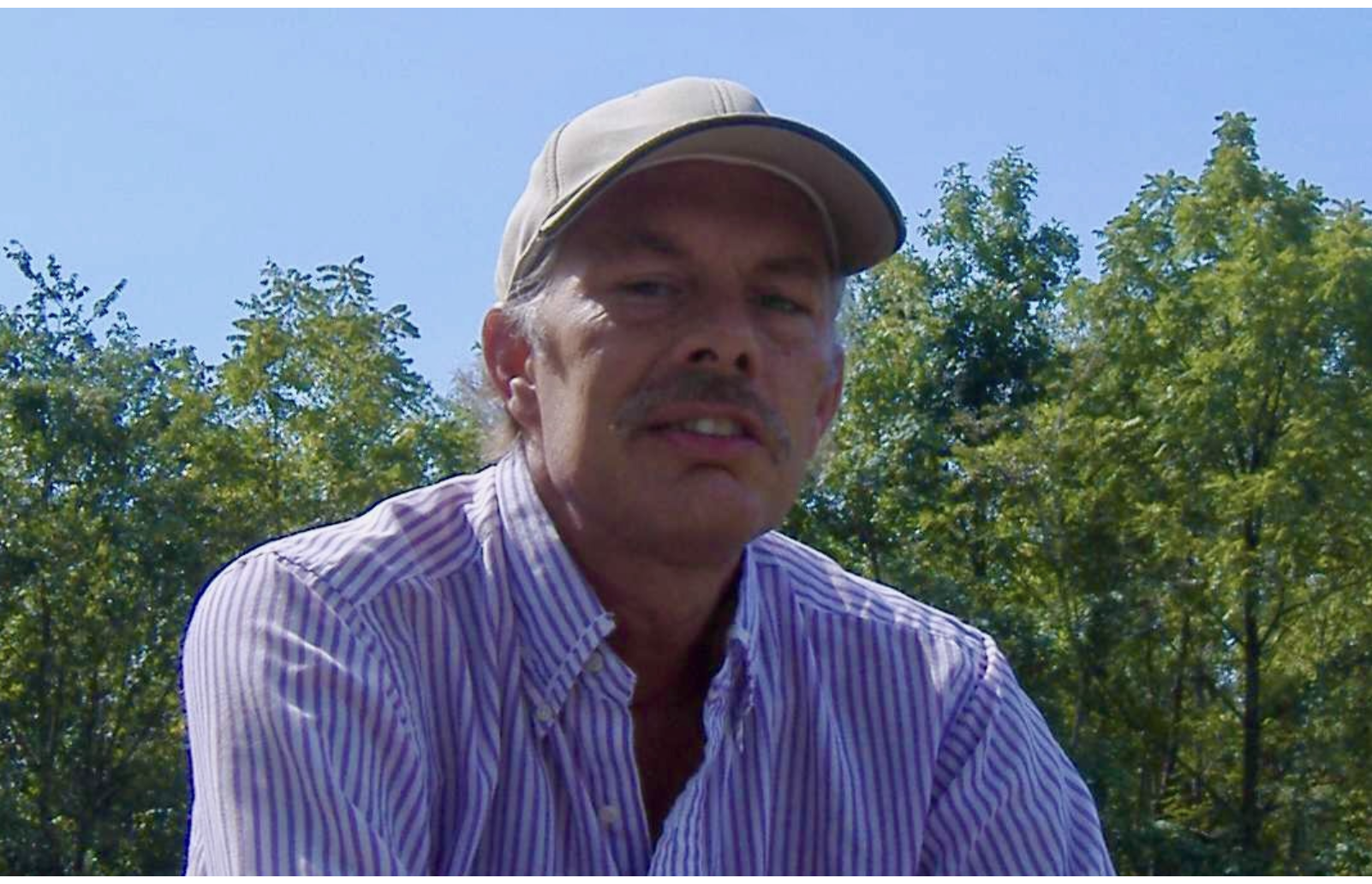
Since receiving a letter from the Missouri Department of Social Services Sept. 1 containing “an important notice” about his federal food assistance, Andrew Dallas has struggled to ease his mind.
Dallas, 63, of Arnold, who was diagnosed with epilepsy after a childhood head injury, can’t work or drive, and he depends on disability benefits and the Supplemental Nutrition Assistance program, previously known as food stamps, to get by.
Skipping meals, Dallas told The Independent, can trigger his seizures. Without SNAP, he said, “I wouldn’t be able to get the food I need to keep myself going.”
Starting Oct. 1, the department will require Missourians applying to receive or renew their eligibility for SNAP to provide documents verifying their housing, utility and dependent care costs, along with financial resources including money in bank accounts.
“Failure to provide requested verification may result in your SNAP application being rejected or SNAP case being closed,” the letter says. “If you do not submit expense verification, we cannot include these expenses in determining your eligibility and benefits level.”
The department says the additional paperwork is intended to reduce Missouri’s SNAP payment error rate before a federal law begins requiring states with high error rates to shoulder a share of benefit costs.
Whether the new verification requirements will significantly reduce Missouri’s overall error rate is unclear. The state’s own data shows the expenses targeted by the new requirements were responsible for only a small fraction of Missouri’s SNAP payment errors last year. Nearly half of the dollars improperly paid or withheld resulted from inaccurate wage and salary information.
And advocates worry the new requirements could create another kind of problem not reflected in the payment error rate: eligible Missourians losing benefits because they cannot produce the paperwork or the state fails to process it.
In an email to The Independent, Baylee Watts, the department’s media director, said federal law does not require states to verify all of those expenses and resources to determine SNAP eligibility, but the department is opting for additional documentation requirements ahead of a key change included in the One Big Beautiful Bill Act passed by Congress last July.
Starting Oct. 1, 2027, states with SNAP payment error rates of 6% or higher will have to pay between 5% and 15% of benefit costs. States can use their error rate from fiscal year 2025 or fiscal year 2026 to determine their benefit cost share for the first year.
Missouri’s error rate in federal fiscal year 2025, from October 2024 through the end of September 2025, was 8.67%, according to data released by the U.S. Department of Agriculture. That could put Missouri on the hook for $150 million in fiscal year 2028, according to an estimate by the Center on Budget and Policy Priorities. USDA will release SNAP payment error rates for the current federal fiscal year, which ends Sept. 30, in June 2027.
Watts said the department required SNAP participants to document expenses and resources until 2001.
“The department is reinstating verification as part of its broader effort to reduce payment errors and prepare for the state share requirement” in the federal law, Watts said.
Five Missouri food security and legal advocacy organizations last week urged the department to delay or cancel the planned SNAP documentation requirements in a Sept. 22 letter to Mandi Adams, director of the department’s Family Support Division.
The signatories — Legal Services of Eastern Missouri, Empower Missouri, the Missouri Budget Project, the GLO Center, which is an LGBTQ community center in Springfield, and A Red Circle, a community organization based in north St. Louis County — argued the planned changes could increase Missouri’s SNAP error rate and deprive eligible low-income Missourians of benefits.
“The department claims that these changes will ‘safeguard resources for households who truly need them,’” the letter says, quoting a statement from Adams in a department press release. “In fact, it will cause thousands of low-income Missourians to lose the nutrition assistance they ‘truly need’ to feed their families.”
In an Aug. 18 webinar hosted by the American Public Human Services Association, Jeremy Bowman, the department’s deputy director of intergovernmental relations, said the state’s SNAP error rate had been “holding steady right at 5.9%.”
“We don’t even want to jump up that little tenth of a percent,” Bowman said. “We just need to keep that to a low.”
Watts confirmed that 5.9% “was Missouri’s state-reported payment error rate for a portion of federal fiscal year 2026” but cautioned that Missouri’s official error rate won’t be released by USDA until June 2027.
Error rate
A department report obtained by The Independent shows that the largest source of errors in federal fiscal year 2025 was inaccurate wage and salary information. Shelter and dependent care costs ranked fifth and sixth.
Out of a sample of 101 cases with payment errors totaling $25,397, almost half — $12,156, or 47.9% — stemmed from inaccurate wage and salary data. Incorrect information about dependent care costs accounted for $1,025 or about 4% of over- and underpayments. Inaccurate shelter costs accounted for another $1,010.
States are required to review statistical samples of households participating in SNAP — active cases — and households whose cases were denied, suspended or terminated — negative cases — and submit that information to the U.S. Department of Agriculture.
Only active cases are used to calculate states’ payment error rates. That means the measure captures benefits that were too high or too low, but not eligible applicants who were wrongly denied or recipients whose benefits were improperly terminated.
Watts said in a Sept. 25 email that the state’s quality control reviews “consistently identify unverified resources and household expenses as primary contributors to SNAP administration errors and overpayments.”
Asked how that characterization squared with the federal fiscal year 2025 data obtained by The Independent, Watts said that while “wage and salary information accounted for the largest share of error dollars” that year, “shelter expenses, dependent care expenses and countable resources also contribute to payment errors.”
Watts said the department is addressing errors from inaccurate wage and salary information by investing in technology to verify that data, including a database called The Work Number, and by enhancing staff training.
Duty to assist
Federal law requires state agencies to assist households in obtaining required verification when they are cooperating with requests for information.
In their letter to Adams, advocates expressed concern that the department won’t be able to process the extra paperwork created by the new requirements — and that when Missourians struggle to obtain requested documents, department staff won’t be able to help.
“Overburdened caseworkers will now have to process voluminous additional paperwork and are more likely to make mistakes, creating the very errors the department claims these changes are intended to prevent,” the letter says.
Christine Woody, food security policy manager for Empower Missouri, told The Independent the bigger concern is what happens when paperwork problems knock eligible people off the program.
The department is “already very limited in their staff, so if that paperwork does not get accounted for, the family will most likely be terminated from the program, and then they’re not counted as an error,” Woody said. “But those are eligible families that need these benefits and could get these benefits based on their income and their resources.”
Watts said that if households provide initial documentation that doesn’t meet the department’s requirements, they will receive a formal request for information from the division, “providing participants with a clear designated timeline to submit the necessary records.”
Instructions and resources for participants on SNAP verification requirements will be posted on the department’s website, Watts said.
The additional requirements come as the department continues to struggle with paperwork processing and helping Missourians navigate applications and renewals for public benefits.
Of the more than 333,000 Missourians who lost Medicaid coverage from January 2025 and February 2026, nearly 92% were procedural terminations, meaning the department could not determine whether they were still eligible because of missing forms, incomplete information or other paperwork problems.
A federal court ruled in May 2024 that long wait times and automatic disconnections from the department’s call center illegally deprived eligible Missourians of SNAP benefits by preventing them from completing interviews required to verify and maintain their eligibility.
A federal appeals court in August asked the district court to consider whether to narrow Judge Douglas Harpool’s order, including requirements that the department ensure that no more than 20% of SNAP applications are denied for failure to interview and that 90% of callers wait no more than 20 minutes to speak with a staff member.
In June 2026, the most recent month with reported data, 24% of SNAP denials were for failure to complete an interview, and 72.3% callers waited no more than 20 minutes.
Dallas is one of the plaintiffs in that case. In 2023, when he tried about 10 times to reach the call center for help filling out his SNAP recertification paperwork, he was repeatedly disconnected. When he was put on hold, he was told there were 234 callers ahead of him, according to court documents.
Now Dallas, who experiences confusion and struggles to focus due to his disability, worries he won’t be able to navigate the new SNAP verification process.
“The stuff they’re requiring makes it seem like I require a secretary to go through my files,” Dallas said. “This is a lot of stuff. It’s overwhelming.”
“All I’m doing now anymore,” he said, “is worrying.”